The Saffron Tales #2

Yesterday I talked about the book itself; today, it’s the recipes.

UnknownThey, too, are great.

Sweets

Sour cherry and dark chocolate biscuits: the first time I made these I couldn’t find sour cherries; that has since been rectified. That first time I used dried blueberries, and they were ok. I really like them with sour cherries – these are some new favourites.

Persian love cake: even though I had no rose water, so I used orange blossom water, this was fantastic. And as Khan herself notes, the cake keeps quite well – I think we ate it over about five days and it didn’t go stale just under plastic wrap in the fridge.

Mains Continue reading “The Saffron Tales #2”

The Saffron Tales

This was sent to me by Bloomsbury at no cost. It appears to already be out overseas, but the Bloomsbury website says it’s out in mid July in Australia. RRP $33.99.

Unknown.jpeg

The book

I love a cookbook with a ribbon.

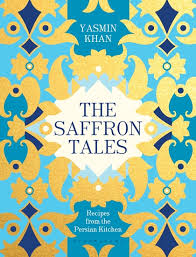
This is a lovely book. I got a hardback version; as you can see, the front cover is gorgeous. I’m a bit torn because the inside cover is also gorgeous, blue with gold writing.

There are photos throughout, not quite of every recipe but close. While I know all of them are staged, they’re not so pretentious as to make me depressed. Each recipe is presented with a little story or explanation in italics to the side, and the recipes are all straightforward to follow.

As well as recipes, Khan presents stories about Iran itself, and some of the people she met during her travels. These are geographical, with sections of Tehran, Isfahan and Shiraz, and Tabriz, for example. Khan doesn’t take the current fashion for Persian food for granted, with an introduction that talks a bit about Iranian culture (she alternates between Persian and Iranian, and explains why at the start of the book) and – admittedly generic – attitudes to food. Plus, and this is something that I really like, there’s an opening discussion of the “The Persian store cupboard”. She given an alphabetical run-down of everything from barberries to yoghurt, explaining their taste and their uses (I’d never heard of golpar before and it’s proving difficult to find). I ALSO really like that she ends this section with the recommendation to “do as the Iranians do and use your taste buds and your eyes to determine which direction a dish should go.” The direction to “just enjoy the process of cooking something new” makes her my new cooking BFF.

Finally, the book ends with a section called Planning a meal (ok, there is also an index, but whatever). Iranian New Year? Persian Picnic? Vegan Feast? Easy weekday suppers? Got you covered.

So, yes, I think it’s clear that this book is a winner. Stay tuned tomorrow for discussion of the actual recipes.

There’s a website!  And the book is available from Fishpond. 

Acts of Kitchen episode 3: Thermomix

AoK_logo_v2In which Katharine talks about joining the cult that is Thermomix, and I talk about sourdough adventures (and disasters) and foodie podcasts. You can listen here or subscribe at iTunes.

Recipes:

Hot chocolate/Yogo; sorbet; bread; risotto (hot wet rice! – The Katering Show); vegetable stock; pesto; mayonnaise; milling your own grains; Pad Thai. All in the Thermomix.

How do you store new recipes?

“If it’s online I bookmark it (or google it each time and I guess have to hope it’s never taken down!) or for a while I was transcribing them all to my listography site (a list taking website)… which I haven’t done in years… so… nothing really. I need to work on that.”

If you want to get in touch with Katharine, she’s on Twitter – @thiefofcamorr – and has an excellent blog (we’re reviewing FarScape at the moment!).

Feedback gratefully received: you can email actsofkitchen at gmail dot com

More sourdough experimentation

IMG_1082.JPGWhen my beloved saw that I wasn’t happy with how my sourdough turned out, and that I wasn’t sure if it was the flour or if I’d over-proofed, he came up with the Scientist’s Answer: run an A-B test.

So this morning we went to Bee Sustainable and got some freshly-milled whole wheat, which is what I used the first time; and we also went and bought a thin rubber sleeping mat to insulate the cardboard box I had been using (because we don’t own an esky and I’m not sure what size I would need to fit boxes or bowls).

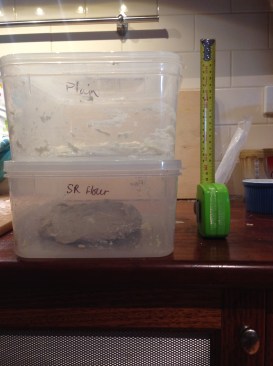
Now, I have made two bread mixes. One, in a container originally used for plain flour, using the Laucke bread; the other, in the SR container, using the wholemeal. I already expect there to be a slight difference because I used the same recipe for both, and white flour needs less water than wholemeal – but I used the same amount anyway. I figured it was a trade-off for the experiment: different flour AND different recipe, or just different flour? It might have an impact on the rise, I’m not sure; we’ll see.

Because I am not great at visually estimating size, I’ve also got the tape measure out, as you can see. I took measurements when I first put the doughs in; I plan to measure every 30 minutes to see what happens.

STAY TUNED!

Update 1: 

IMG_1083

Update 2: Continue reading “More sourdough experimentation”

Sourdough experiments

Having a look around at sourdough recipes, we came across Cultures for Health. Which means I found a bunch of recipes to use ‘discarded’ starter, including one for pancakes.

So I decided to try sourdough pancakes. I over-estimated how much oomph would come from the starter, so I used plain flour instead of self-raising; I realised this was a mistake when the pancakes didn’t get very fluffy and were in fact a little on the gooey side. Nonetheless, they were quite tasty and I would definitely make them again with discarded starter.

IMG_1076.JPGI’ve also made more bread, and experimented this time with different flour. I know I’ve seen baker’s flour before but couldn’t find it anywhere I looked – well, except for in 10kg bags and that seemed a bit much just at the moment. So I got  Laucke bread mix, since the yeast is separate – I figured it was likely to be good for bread since it’s designed for bread machines… right?

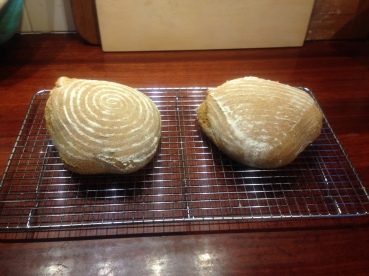
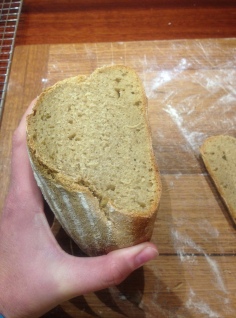
My first slice, when admittedly it was still a bit warm, suggests that it might be a little on the gooey side. Additionally, the crust came away from the loaf proper, which might mean that I over-proofed it. Also, as you can see from both the cob and the log, it seems the oven isn’t uniform in temperature, which is interesting – the last loaves didn’t do that. I guess more experimentation is required. WHAT A SHAME.

Persian-ish French toast

When I made my first sourdough last week, I made a fruit loaf and two cob loaves. Thing is though, we’re kind of out of the habit of eating bread. So today I still have one of those loaves left (it was also a somewhat exceptional weekend which involved zero cooking). I thought, therefore, to see whether slightly stale sourdough bread would make good French toast. Or at least edible French toast.

IMG_1073.JPGI found a recipe in Sabrina Ghayour’s Sirocco for brioche doughnut French toast, inspired by everyone’s favourite Nigella. It involves vanilla and orange zest in the egg mixture, and then sugar and ground cardamom (guilty: I used pre-ground instead of grinding my own). And it was delicious. The bread was just slightly on the chewy side, but I actually didn’t mind that; it wasn’t as thickly cut as you would use brioche, which helped. The orange and cardamom were excellent.

I served myself some Greek yoghurt as well, and it was excellent.

Of course, I’ve now reminded myself how easy French toast is, so that may have Ramifications…

Acts of Kitchen: episode 2: cooking for shearers

AoK_logo_v2

The second episode is here! In which I talk to my dear Aunty Rena about what it’s like to cook for shearers. Also, there’s poetry. You can listen here or subscribe at iTunes.

Recipes:

Shepherds pie, roasts, chops… meat and three veg…

How do you store new recipes?

“Always picking up new recipes. I have a book for them, I put some loosely in a cookbook, I put some in the pantry so I know where they are and then I loose the lot and ask Mr Google to find more for me. He is fantastic – I couldn’t live without him!”

Feedback gratefully received: you can email actsofkitchen at gmail dot com

Bread, baby. Bread.

IMG_1037.JPGI have finally made my first batch of sourdough bread with my leaven (who might be Geoffrey… or Godfrey… or something like that…) thanks to my sourdough course at RedBeard.

Win: I managed to get the bread out of the bannetons without any hassle! This suggests I had floured the baskets well enough, which pleased me.

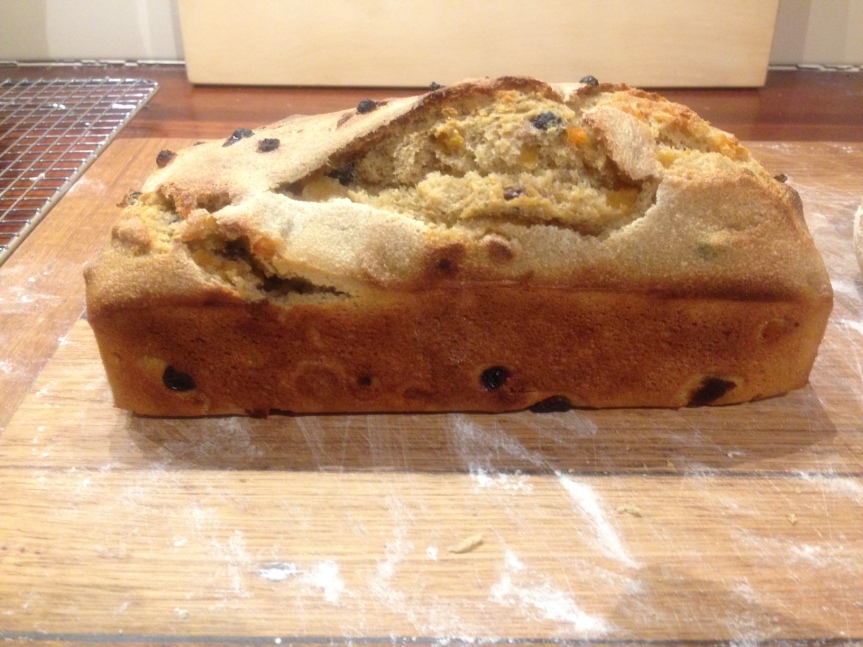
Slight loss: I think the bread is a bit doughy. I’m not sure whether this is a result of the house not being a constant temperature, or me not making quite the right IMG_1038.JPGmixture, or… what. But it tasted pretty good, so

Win!: it tasted pretty good! And it was mostly wholemeal (freshly milled and everything, from Bee Sustainable), but it wasn’t too heavy at all.

Experiment: I made fruit-ish bread. That is, it’s definitely got fruit in it – dried apricots and currants, and cinnamon and nutmeg, all added about an hour… ish… after it started rising. But I haven’t tasted it yet so we’ll see what it’s like… eventually. Sure looks pretty, though, doesn’t it? IMG_1039.JPG

Acts of Kitchen: episode 1: talking to my mother

AoK_logo_v2

That’s right folks, here’s a new podcast! It’ll be fortnightly, and feature me interviewing someone about food and cooking as well as a bit of me talking about… stuff.

ETA again: It’s on iTunes and everything!

In the podcast we talk about an amazing dish from my childhood called Mighty Mince, the annoyance of feeding fussy eaters, and the ways that my mother’s cooking has changed over the last few years. She’s not on any social media but if you’ve got anything you’d like to tell her, I promise to pass it on.

ETA:

Recipes: Mighty Mince, chow mein, slow-cooked lamb, lemon delicious; Jerusalem (Yottam Ottolenghi)

I’ll be asking future guests how they store recipes they like (thanks to Terri for this suggestion. My mum said:

“Usually in my very old folder of recipes that you updated for me many years ago. Sometimes in a book that has similar recipes e.g Thai recipes in my Women’s Weekly book of Thai food.”

Feedback gratefully received: you can email actsofkitchen at gmail dot com

Wholefood from the ground up

This book was sent to me by the publisher, Allen&Unwin, at no cost. The RRP is $39.99 and it’s available 9781743365373.jpgfrom today (May 25).

Recipes I’ve tried

Potato and celery salad with celery leaf pesto

My darling isn’t a huge fan of basil pesto, as a rule, so I was curious to see how he felt about this one. It’s made with the inner celery leaves (the yellowy ones), parsley, capers, pine nuts and pecorino (I used parmesan) plus the other normal pesto bits. And the answer was that he really liked it – as did I. It’s a lot subtler than basil pesto (which I do love), but still very tasty. This recipe puts the pesto with boiled potatoes and inner celery stems. I served it with those and chicken, and ate the leftover chicken with leftover pesto the next day. Very nice.

Baked spicy cauliflower, chickpeas and fresh dates

First change: no fresh dates, so used dried ones. Anyway – cauliflower with cumin and coriander and garam masala, baked; always lovely. Cook onion and add chickpeas, then throw those on top of the cauli and add the tahini which you’ve mixed with orange juice and zest and a bit of sweet. I served this by itself but would definitely make it again to serve with other salads. Very tasty and I enjoyed the mouthfeel of cauli with tahini. I suspect this may become a favourite pairing.

Pocket pie: moroccan-spiced pumpkin, silver beet and goat’s cheese

Look, it’s fair to say that this recipe caused some anguish. This is probably largely on me, because Blereau’s recipe calls for shortcrust pastry to be made from spelt and barley flour, but the two places I tried – the supermarket (I live in a hipster and immigrant area, so it’s not that ridiculous) and a bulk-food place – did not have barley flour. So I subbed in ordinary flour. I did not do the research into whether or how barley flour deals differently with butter compared with ordinary flour. The pastry was very short and I found it very difficult to deal with. There might have been some shouting. Still, with the soothing hands of my beloved we did end up making them, and they were tasty enough; it seemed like a lot of butter, because they went very crispy. The filling was ok – roasted pumpkin with coriander, cumin, and fennel.

Split pea, fennel and winter vegetable soup

Again, neither of the places I checked had green split peas. The supermarket had a spot for them, but they were out of stock. So I used a normal soup mix. This is a very nice soup but it’s not anything out of the ordinary.

Creamy fresh corn polenta with refried black beans

I think I’ve made polenta maybe once, and that was to cut it up into squares and bake it (which was nice). This recipe recommends cooking the polenta in a fatty stock, and I realised that I had a lamb ‘stock’ in the freezer from ages ago – I think it was liquid I drained off some dish and couldn’t bear to throw. So I used that to cook the polenta, and it was delicious. The refried black beans were also really nice, with capsicum and coriander and a little too much chilli for my tastes (c/ beloved being a little heavy handed). We didn’t add the corn to this because we’re not huge fans; I didn’t think the dish suffered for its lack.

I ignored most of the section on ‘basics’, like using kefir grains in… stuff… and preparing and cooking beans, lentils, and grains.

The book itself

It’s a well presented book, as you’d expect from Allen&Unwin; it’s one of those big cookbooks, with what feels like a solid spine, and generally appetising photos throughout. Each recipe has dietary info about whether it’s dairy or gluten free, vego or vegan, and other allergy stuff. However the recipes, while nicely set out on the page, sacrifice font size in favour of white space, which makes reading from a distance something of a struggle – not great from the other side of the stove.

I have two main issues with the book. One is perhaps obvious from comments above: there are ingredients in here that were not easy for me to find. I do not know what kombucha or kefir grains are, nor where to find them. I live near the city, in a hipster area. Probably I could find these things, and I know I could find them online, but the point remains that this is not an easy, automatic book to cook from – and that’s not acknowledged anywhere, as far as I could find. Connected to this is the reality that this is not a book for the economically poor, nor the time poor. This is not necessarily a problem, if you’re buying for yourself and willing to put in the time and money, but it is something that should be acknowledged. Blereau is all in for pre-soaking beans and grains and then cooking for however long, so you need to be prepared for that if you want to follow the recipes precisely. And of course being prepared for the time it takes to make cultured cream and so on with your kefir grains.

And then there’s the wholefoods thing. I am not on the wholefoods bandwagon. I am all in favour of cooking food from scratch if you have the time, I understand some of the issues with overly processed stuff, and so on. But when I read the introduction to this book, I ended up getting out a pencil and making annotations in the margins because I got annoyed with it. For instance, there’s the suggestion that industrialisation of food in Australia started in the 1960s and 1970s, and grossly generalised statements about ‘traditional cultures’ that enjoy ‘good health and happiness’ all understanding that our physical bodies are ‘formed of and governed by the forces of nature’… whatever that means. And then there’s her suggestion that she grew up with a ‘strong, intact food culture’ and that many people today are ‘without a strong grasp of food culture.’ Maybe ‘food culture’ means something really specific that I’m not aware of, but I think that is bordering on offensive. (Do not get me started on the idea that herbicides and fungicides are ‘derivative of nerve gases left over after the early wars’ – my note in the margin says “what, Persians? Assyrians?”)

In the end, I think that this book has some interesting recipes in it, but if you’re not completely on board with wholefoods you might find it more annoying than not. That said, if you ARE into wholefoods (which is totally fine I would just rather have a more scientific discussion about it), this may well be the book for you, especially if you’re just starting out and are interested in exploring different sorts of grains and how to actually use them in meals.

It’s available from Fishpond.