Luke Mangan’s Sharing Plates

UnknownThis book was sent to me by the publisher, Murdoch Books, at no cost. It’s out now; RRP $39.99. (See here for my discussion of some recipes.)

Overall, this book is well presented and the format of the recipes is basically approachable. The binding of my copy seems like it will cope well with wear and tear; the pages are not going to be destroyed by some cooking splatter. I do, however, have some reservations.

I was really excited about the idea of ‘sharing plates’ because I like the tapas/mezze concept a lot. While some of the recipes here do allow for a tapas or mezze style presentation, many of them don’t, really: they’re just recipes that scale well for more than two people, and that would make nice dinner party meals. They do not all lend themselves to being presented on a central plate, for instance, any more than any other meal does – I mean, you can put spaghetti bolognese in the middle of the table and let people serve themselves; I love that idea and I would totally do that but it doesn’t automatically make it a ‘sharing plate’.

In the advertising copy, the book is suggested as showing “how to keep menu planning easy, it’s often simplest to stick to a general style of cuisine” (that’s [sic]), and that the book “shows us how to think about balancing flavours and textures, how much time you have for preparation and what elements of the menu can be made well in advance.” In the introduction, Mangan does say that balancing flavours and textures is important and that you should think about what sort of time you have, and that “to avoid a confusion of flavours, and to keep menu planning easy, it’s often simplest to stick to a general style of cuisine… but don’t be afraid to be a bit adventurous too” (7). All of this is sensible advice.

However. Firstly, while some recipes are identified by their provenance – parathas as Indian, braesola as hailing from Italy, ‘po boys’ as a traditional sandwich in Louisiana (um, and Thai beef koftas…) – this is not the case with every recipe. So in order to “avoid a confusion of flavours” you either need to know the cuisine of the recipe you’re looking at (or look it up), or spend time comparing ingredients to figure out if they’ll be complimentary. And there’s no “this goes well with that” throughout the book – and no suggested menus – to help someone unfamiliar with any of the recipes. So… not so much with helping in that respect. Secondly, while some of the recipes do tell you what can be made ahead of time, none of the recipe pages tell you how long each step will take. There is no Prep Time/Cooking Time to give you an immediate indication for how time-consuming a recipe is. This is a serious deficit and to my mind negates any notion that this book wants to help you in how you plan your time.

The book is divided into several sections: Breakfast and Brunch; Bread; Snacks and Salads; Oysters and Sashimi; Fish and Shellfish; Meat; Poultry; Sweets. There’s a Basics section, too, with salad dressings and such. I have never seen a cookbook with an entire section on oysters and sashimi! They are very much not my bag but I understand that if you do like them, and have access to a good fishmonger, then such a chapter would be brilliant – they can definitely work as sharing plates. Each section starts with a little introduction from Mangan… to be honest I didn’t feel like they added much to an understanding of what each section is about; they mostly have a few platitudes (“I’ve never really been one for food trends; I believe in good, honest food that’s approachable for everyone”, p131) and some suggestions of which recipes might be particularly good in the coming chapter. As with Julie Goodwin’s book, each section is a different colour so it’s straightforward to flick to the section you want (grey for meat, though? not so appealing).

The recipes themselves are presented one per page, with many having nicely-styled photos accompanying them. The ingredients are listed in bold on one side, the instructions on the other side of the page. If there are multiple parts to the recipe (lamb filling/empanadas/mayonnaise, for instance), then they are clearly separated on the page with bold headings. How many of each thing, or how many people are served, is made clear at the top of the recipe. However, as already noted, there is no indication of how long each step will take. Each page has nice big margins for writing in if that’s your thing.

Julie Goodwin’s Essential Cookbook: the book

Julie Goodwin's Essential CookbookThis book was sent to me by the publisher, Hachette, at no cost. RRP $39.99; out now.

This is an overview of the book as an object; I’ll discuss some of the recipes tomorrow.

The cover makes this seem like it’s going to be all about baking; it most definitely is not. In fact, baking and dessert are a relatively small portion of the book.

In her introduction, Goodwin says this is “a collection of everything I think is important to know in order to be able to nourish yourself and the people you love”. It’s home cooking, not Palomar. So it’s much more my sort of thing.

The book is divided into sensible but also intriguing chapters: Eggs; Meat; Poultry; Seafood; Sauces, soups, and dips; Vegetables and Preserves; Baking; and Desserts. In that order. They largely make sense, although sauces, soups, and dips isn’t intuitive to me. What I do like is that each chapter has differently coloured page numbers, and they progress down the side of the page so all teal Egg pages are grouped, and so on. Easy to flick to the chapter you want just by looking at the edge of the book.

The meat section is divided into beef, pork, and lamb, while poultry is chicken, duck, turkey and quail. Seafood is shellfish, fish, squid and octopus. The vegetable chapter is mains, sides, salads, dressings, pickles and preserves. Each chapter has a short introduction to the chapter. This is fairly extensive for the meat chapters, with information about how to cook different cuts.

Not all of the recipes fit onto one page, which could be a bit annoying if you need to flick back for ingredients. I think this is partly because not every recipe has a picture, so you’re getting more recipes into the book (only 310 pages including index etc) than you otherwise might. It just means you need to take that into consideration. The recipe pages themselves are set out with nice wide margins, and nice spaces between each step, so it’s straightforward to figure out where you’re up to (and add notes if necessary); the headings for each recipe are easy to find and the ingredients are a different colour from the method, which I really like. What photos there are are generally indicative of the finished product, and don’t come across as TOO highly workshopped. The index seems quite thorough.

As an object, this is a nice book. It’s got perfect binding and the flop is surprisingly good. The paper is thick enough that splatters aren’t going to ruin it and I’ll be able to write on them without going through to the page behind.  The front and back covers have half-flaps, which I personally like to use as bookmarks.

A couple of nit-picks: in the Cook’s Note, Goodwin says that for her, shallots are “the long green onions that are sometimes called spring onions”. I found this quite surprising since I don’t remember coming across an Australian author who didn’t just use spring onions! And in the baking section, there’s an instruction to whip eggs and sugar until there’s a ribbon… and in the next recipe, there’s an explanation of what “a ribbon” actually looks like. I can only assume that the recipes were originally in a different order.

I got to interview Julie briefly, too.

Cooked, by Michael Pollan

images.jpegThis book was recommended to me by the sourdough baker whose course I took. It turned out that I had already one of Pollan’s books – The Botany of Desire, which was awesome and looked at various plants in light of the general idea of desire. (My biggest take away message: the Agricultural Revolution was the grasses using humanity to destroy the trees. Also that all edible apples are clones.)

This book is Pollan’s attempt to learn more about cooking, having looked at the gardening and the eating side for a long time. He divides the book into four sections: Fire, Water, Air, Earth. Or, basically: barbecue, braise, bread, and fermenting. Continue reading “Cooked, by Michael Pollan”

Istanbul Cult Recipes: the recipes

unknownWhat I thought of the book itself.

Now, the recipes!

Things I’ve made:

“Lady’s thighs” – these are kofte (uh, not softie, autocorrect) that are apparently meant to be shaped like lady’s thighs? Or something. Anyway, steak and rice and some spices – very simple, very tasty.

Beef dumplings – ‘manti’, “the unmissable little Armenian dumplings”. Simple dough (flour and oil and a little water); a spoonful of minced beef and onion into the middle of 6cm squares, fold them up into boats and bake in the oven with some broth around it. SO good. I plan to experiment with spices… and they freeze brilliantly.

Zucchini fritters – zucchini, eggs, dill, parsley, feta. Fry. Delight.

Lentil balls – my one failure so far. They tasted fine… but they didn’t become balls. They wouldn’t stick together, so I used it as a basis for meatballs. Still: lentils and burgh and garlic and chilli paste and parsley and spring onions…

Shortbread – actually the first thing I made, for a church fete. They got a good rap because, as someone said, they’re not toosweet. They’ve got flour and almond meal (the ground walnut option is intriguing), and only 80g caster sugar for 500g other dried ingredients. Easy to make, easy to eat.

Things I want to make:

Milk buns with feta kneaded through… :O

Lentil soup – so easy! red lentils and tomato…

Stuffed vine leaves – I’ve always been dubious of my ability to make these, but you can use silverbeet! instead of vine leaves! and somehow that seems more accessible.

Borek – filo (although given where I leave I might be able to access yufka pastry…) with feta… sounds awesome.

Almond helva – although making my own helva could be a deeply dangerous thing to do HOW GOOD WOULD THAT BE?!

Things I won’t make:

I can’t come at tripe. Uh, no. I also don’t think I can access mutton so I guess I’ll try some stuff with lamb instead…

Istanbul Cult Recipes

This is the book I haven’t been able to mention on the podcast! And now I can!

This was sent to me by the publisher, Murdoch Books, at no cost. It’s available now; RRP $49.99.

Unknown.jpeg

The book itself

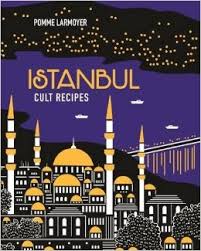
is a lovely object. My copy is a hardback and the image on the front is delightful; the bits that look yellow in the pic to the left are actually gold. It’s a hefty tome, with about 250pp of recipes and good thick covers.

The book is divided into several sections: At the Kahvalti Salon (breakfast); The Meyhane Table (meze and fish); Lokanta, Kofteci, Kebabci (soups, meats and rice); At Home (family recipes); Street Food; and Turkish Delights (sweet things). It’s an intriguing division, especially that central set of chapters, because they don’t correspond to meal times as other books often do. Instead it’s more about the style of food, which I quite like, once you’ve got your head around how to look for particular sorts of food.

The other intriguing aspect of the book is that it’s not just recipes. It’s not even just recipes plus stories about the people. No; Larmoyer is toying with the reader/cook and may be in cahoots with the Turkish tourism board because each chapter also has a double spread on where to go in Istanbul in order to eat. There’s a map and a list of the best places to go for different specialities. Which… seems a bit cruel, really. But at least the book provides recipes to help those of us who can’t up and run to Istanbul at a moment’s notice.

The book is replete with pictures of both the food mentioned and the places where it’s bought and made. The recipes are laid out across a single page, with a story or tip for each one; pretty much all have at least one photo accompanying the recipe. A lot of these photos look quite domestic – I’m sure a lot of thought went into styling them to get the effect, but I do find it reassuring to see a photo, when flicking through the book, that doesn’t look too enormously different from what would be possible in my own kitchen! (Except for the pictures of producing epic quantities of baklava. EPIC.) The ingredients are listed in bold type, which I like, and so far they seem straightforward to follow.

As a book, this is a very attractive object. Find out tomorrow what I thought of the recipes! (… eh, spoiler: they’re good.)

Palomar: the food

This book was sent to me by the publisher. Go here for discussion of the physical product.

4the-palomar

There’s some nice basics in here: harissa, watercress pesto (which I used to make snow pea pesto, and it was quite good), labneh and tapenade. I have prepared the cured lemons – one thing I do not lack is lemons – which the book promises will eliminate a “bleach-y taste” they claim preserved lemons carry. I haven’t noticed. I haven’t turned them into cured lemon paste, yet, but I definitely plan to. These things are in “The meal before the meal,” along with other dips and felafel and such.

The next section is “Raw beginnings” and I haven’t made anything from this section… and I’m not likely to. I’m allergic to scallops so that’s a few recipes gone, and I’m just not the sort of person who will ever come to steak tartare. There are one or two salads that might get a look at.

I have mostly cooked from “The main act.” The book has two shakshuka recipes; I’ve made the “New style” one with cauliflower, zucchini, garlic and chilli and coriander – then eggs cracked over. It was ok – I was perfectly happy to eat it – but not completely brilliant. It was one I had altered, taking out the eggplant because my beloved isn’t a huge fan… but since the recipe has a section called “Variations,” telling you to “reinvent” it every time, this shouldn’t have been a problem. I am intrigued with making it with chorizo and/or olives, feta… or, they promise, “any old stew or cooked vegetable you have as leftovers from yesterday’s main meal.” So I’m not quite giving up on this.

Polenta Jerusalem style: I admit I used instant polenta, which the author of the book would abhor, but that’s what I have. This involves making polenta; putting “mushroom ragout” on top (mushrooms cooked in butter), and then blanched asparagus. Garnish with Parmesan. I mean yes, it was tasty, but it’s not all that miraculous. Maybe ‘real’ polenta makes a huge difference?

Aubergine and feta boureka: ok these were quite cool. Bourekas are made by cutting butter puff pastry into four triangles, then brushing with egg, sprinkling with sesame seeds and cooking for about 18 minutes at 200C. Then you halve them and throw stuff on top – again, I omitted the eggplant, but the swiss chard stew with bacon and feta was really good. (This recipe also looks awesome.)

Papi’s spinach gnocchi: was a disaster. I’ll wear this one because I didn’t want to simmer them in goat’s yoghurt (too hard), so I simmered them in water instead. They just fell apart. I didn’t drain the spinach enough? Who knows.

Right in the middle there’s a series of pictures showing octopus – both cut up and not cut up. It’s my least favourite part of the book.

Cod chraymeh: I didn’t use cod, because that’s too hard in Australia; I think I used ling. This was … well, not flavourless, but really not worth the effort. It has red capsicum, garlic, spices, harissa… I was surprised how much it didn’t work.

Chicken thighs in green olive and tomato sauce: this was quite nice – the chicken with the olives worked really well.

IMG_1293.JPGLabneh kreplach tortellini: probably my favourite recipe to date. Kreplach are “the Ashkenazi Jewish version of Italian ravioli, Chinese wonton or Russian pelmeni.” Palomar suggests making IMG_1294.JPGthem like choux (choux? I can totes make choux) – flour into boiling water, into the processor to add more flour and egg yolks (which means making meringues later), then leaving the dough til the next day to roll and fill. As the name suggests, these were filled with labneh (yes, homemade) mixed with za’atar. I then simmered them in borscht (made with some of my own beetroots, EAT YOUR HEART OUT Katering Show). It was awesome. (I’m interested that a number of online recipes, like this one, call for whole eggs – no meringues! – but very excited that it points out that like dumplings, kreplach can of course by frozen. EXCELLENT.)

IMG_1295.JPGVerdict: I’m not sad to have experimented with it, but I wouldn’t be rushing out to buy it for all my friends. Possibly I’m spoiled by Jerusalem plus my two Sabrina Ghayour books, and The Saffron Tales, which basically cover these sorts of recipes – the ones I’ve enjoyed anyway. That said, I am looking forward to trying the date roulade, and their version of pitta bread.

Palomar

This book was sent to me by the publisher, Hachette, at no cost. It was published in August; RRP $39.99.

4The-Palomar.jpgPalomar is apparently one of the hottest restaurants in London at the moment: it seats 34 people and the waiting list is up to six months, I’m told (I hadn’t heard of it – because Australian, and because not really up on my Famous Restaurants Trivia). I’ve been a bit conflicted about the cookbook.

But I’m ready to call it now. Sadly, this book has not become one of my favourites.

What it is:

  1. Beautifully presented. I mean, that cover is elegant and alluring, and under the slip cover is a glorious blue hard cover with a gold pattern such that I am agonising over whether to keep the cover or not. The inside is beautifully presented as well. The photography is delightful – a mix of shots in the restaurant, shots of the people, and shots of the food. The recipes themselves are well laid-out, with the ingredients in a black-lined box, and clear steps to follow for each recipe (although sometimes the small type isn’t great). Each recipe also has a little story in italics at the start; the stories are sometimes funny, sometimes nostalgic, sometimes practical. And there’s a little insert of cocktail recipes too.
  2. Largely accessible. Like Indian Made Easy and The Saffron Tales it has a section called “What’s in the cupboard?” which has clearly become The Thing You Must Do When Talking About “Ethnic” Food. This section has info about everything rom freekah to date syrup and information about spices and nuts. Most of the recipes I’ve looked at have ingredients that, today, in a multicultural city or with access to the internet a home cook would have access to. The final mini-bio, of Yossi ‘Papi’ Elad, instructs the reader not to consider “recipes as sacrosanct – they are creations of human beings, so use your imagination” – a blessing that I really appreciate, since I don’t always have the right things to hand. Some of the recipes do, of course, require time and skills – but not all.

What it isn’t:

That inspiring.

Some of the recipes I’ve made have been flops, and they have mostly been my fault, so I’m wearing that and definitely not blaming the book. But others… they’ve worked, but they just haven’t been super exciting. I haven’t made any dessert yet, and some of them do look intriguing, so maybe that’s where I’ll find the lurve.

I’ll discuss the recipes in detail in tomorrow’s post.


The Pedant in the Kitchen

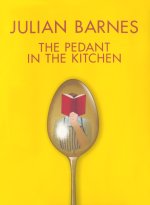
Pedant_150x205.jpgMy beloved, loving, and never at all snarky mother gave me this book a couple of years ago, for my birthday I think. I was a little miffed at the time, although that didn’t stop me enjoying it. I’ve just re-read it, and once again I really appreciated it. In fact, I think I got more out of it on this read-through.

Barnes describes himself as a pedant because he will never be one of those breezy “oh, I never use a recipe” type cooks; he uses recipes, he sticks to recipes, and he gets incensed when, for example, a recipe has step 1, step 2, and step 4. He loathes being told to use a lump or a gout of some ingredient. By this measure I am absolutely, almost irredeemably, a kitchen pedant. And I’m ok with that. I know that I will never really be a kitchen experimenter. I can make a meal without a recipe but only if it’s very standard meat and veg, or some vague pasta sauce. Barnes reassures me that there are other people like me out there, and we’re ok. We’re really ok.

This book is funny. Like laugh out loud sometimes funny. But possibly only to other pedants. And possibly if non-pedants laughed, I would feel a bit offended; we only get to laugh when it’s laughing at us, right? So only a pedant really appreciates the frustration inherent in figuring out the differences between chopping and slicing an onion (and does it make a difference?) or the frustration of not being to fit two pork chops and four chicory halves into one pan.

But there’s also a wonderful degree of comfort and reassurance in Barnes’ writing, for someone like me who stresses and overthinks things. When asked how many cookbooks you have, do you say

a) not enough,

b) just the right number, or

c) too many?

Barnes points out that if you answered b) you’re either lying or have no interest in food… or, most frighteningly, you’ve worked everything out perfectly. Maximum points are scored for answering both a) and c), which is exactly what I would have said. His description of trying to deal with That Drawer (Cupboard, Shelf, whatever) – what to throw out, what to keep, what’s your criteria? – is both funny and exactly how I feel; and his lament and reassurance that no one (not even Elizabeth David) ever has the perfect kitchen is a delight.

This is a delightful little book, and I love it. Only for the pedant, though. Available from Fishpond.

Lunch in Paris, and chouquettes

Unknown.jpegI’ve had this book on my shelf for a very long time, and I’m not sure why I haven’t got around to reading it; I guess I just haven’t been in the mood for a twenty-something-in-love-in-Paris memoir with recipes.

I’ve finally read it. Turns out this might be a Thing. To the point where I’m tempted to go look at Amazon and check out If you like this, you might like…

Elizabeth Bard is a romantic, preferring museums over night clubs and dreaming of living in the past. She begins her story with “I slept with my French husband halfway through our first date” and goes from there, describing weekends in his French flat and exploring the city, the food, and their developing relationship. It’s definitely nice to know that they do end up together; it makes it a more comforting read, to know the ending.
The story is basically an analysis of an intercultural relationship, as well as the somewhat difficult* road she took to get from innocent-arrogant-American thinking she can do anything to eventually writing this book. She had a lot of ‘who am I and what am I’ moments that struck a chord with me. It’s a nice story overall, and the memoir aspect is touching – her remembrances of her mentally ill father, the difficulty of making friends in France, negotiating with her own and his parents: it’s well written, with appropriate pathos but no eye-roll-y over-the-top woe-is-me wailing. I enjoyed it a lot more than I thought I would; I was at the hankering-to-keep-reading stage at 11pm.

And every chapter has recipes at the end.

I’ve never been especially keen to try French cooking. For a long time I harboured a deep-seated desire to make croissants, until I saw a video about the endless folding, and then voila! I was cured. Anyway, I suspect that this somewhat American take on French cooking IMG_1205.JPGis likely to be a bit easier for me. And when I saw the recipe for chouquettes, I thought – really? that easy? So I tried, and I made them, and they worked, and now I can make chouquettes. I AM VERY EXCITED. This might be a new thing for me.

Available from Fishpond.

*yes, the difficulty is all within the context of white privilege; she admits that she isn’t exactly in the hardest place in the world, but I think we all know that when nothing is going our way it feels like the worst thing ever.

Indian Made Easy: the recipes

9781743368565On the book itself.

The introduction proclaims this as a book “about discovering a casual attitude towards Indian cookery”, and that some of the recipes have been “distilled and pared back for busy modern cooks.” I would say that this is a book for a fairly experienced cook – that is, someone who won’t be put off by making their own simmer sauce or following a few steps – but who has never cooked much Indian food. Which pretty much means me.

The recipes

Paneer: yes, ok, I made paneer. I had a litre of milk nearing its use-by and I didn’t want to waste it, so I thought I’d experiment, ok? I don’t imagine I’ll be doing this every time I want paneer but it’s nice to know I COULD. It was easy, and the instructions (except for that confusing ‘do I turn off the heat when it’s 80C or after I’ve added the acid??’ question) were easy to follow.

Charred Broccoli with Chilli and Fennel: the fennel is fennel seeds, and the garnish is what really makes this – toasted coconut, pomegranate seed and coriander! Broccoli and coconut is amazing! Also the mustard and fennel seeds were nice with it too.  Continue reading “Indian Made Easy: the recipes”