Family feasting

I had the opportunity to cook for part of my family this weekend – which doesn’t happen very often – so I decided to experiment. Which is perhaps dangerous, but that’s How I Roll.

9781743368565Dinner #1: Indian Made Easy

Chana Masala – chickpea stew basically. It was ok, although not as large as I had hoped. So it’s a good thing that I also made…

Stuffed potato and pea cakes – mashed potato with spices, wrapped around pulsed peas and paneer and more spices, lightly fried. 110% would make again. So good.

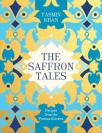
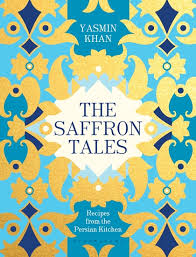
UnknownDinner #2: Saffron Tales

Chicken with walnuts and pomegranate – I’ve looked at this a couple times but been put off by the amount of time required with the walnuts. You need to cook the blitzed walnuts with water for two hours, so that it turns into a porridge-like consistency. But you don’t really need to do anything with it, just stir it occasionally, so if you’re home anyway it’s pretty easy. Then you add chicken (or eggplant) and pomegranate molasses and leave it for another 40 or so minutes and… absolute culinary delight; my sister thought it looked like mole (she’s just back from Mexico). Can’t wait to eat this again. Served with…

Coconut rice (because I couldn’t be bothered with proper Persian rice with saffron etc), and a play on salad shirazi (we removed the red onion and added avocado).

But wait! You’re all saying. What about dessert?! My sister made Nigella’s boiled mandarine cake. Which was good… after, um, a slight mandarine+saucepan malfunction. Probably the less said about that the better, if I want to stay on her good side…

Indian Made Easy: the recipes

9781743368565On the book itself.

The introduction proclaims this as a book “about discovering a casual attitude towards Indian cookery”, and that some of the recipes have been “distilled and pared back for busy modern cooks.” I would say that this is a book for a fairly experienced cook – that is, someone who won’t be put off by making their own simmer sauce or following a few steps – but who has never cooked much Indian food. Which pretty much means me.

The recipes

Paneer: yes, ok, I made paneer. I had a litre of milk nearing its use-by and I didn’t want to waste it, so I thought I’d experiment, ok? I don’t imagine I’ll be doing this every time I want paneer but it’s nice to know I COULD. It was easy, and the instructions (except for that confusing ‘do I turn off the heat when it’s 80C or after I’ve added the acid??’ question) were easy to follow.

Charred Broccoli with Chilli and Fennel: the fennel is fennel seeds, and the garnish is what really makes this – toasted coconut, pomegranate seed and coriander! Broccoli and coconut is amazing! Also the mustard and fennel seeds were nice with it too.  Continue reading “Indian Made Easy: the recipes”

The Saffron Tales #2

Yesterday I talked about the book itself; today, it’s the recipes.

UnknownThey, too, are great.

Sweets

Sour cherry and dark chocolate biscuits: the first time I made these I couldn’t find sour cherries; that has since been rectified. That first time I used dried blueberries, and they were ok. I really like them with sour cherries – these are some new favourites.

Persian love cake: even though I had no rose water, so I used orange blossom water, this was fantastic. And as Khan herself notes, the cake keeps quite well – I think we ate it over about five days and it didn’t go stale just under plastic wrap in the fridge.

Mains Continue reading “The Saffron Tales #2”

Acts of Kitchen: episode 2: cooking for shearers

AoK_logo_v2

The second episode is here! In which I talk to my dear Aunty Rena about what it’s like to cook for shearers. Also, there’s poetry. You can listen here or subscribe at iTunes.

Recipes:

Shepherds pie, roasts, chops… meat and three veg…

How do you store new recipes?

“Always picking up new recipes. I have a book for them, I put some loosely in a cookbook, I put some in the pantry so I know where they are and then I loose the lot and ask Mr Google to find more for me. He is fantastic – I couldn’t live without him!”

Feedback gratefully received: you can email actsofkitchen at gmail dot com

Spit Roast Experiment #2

Spit Roast Experiment #1 was in aid of Spit Roast Experiment #2, because we’d invited people over for #2 on the basis that we’d get all our issues sorted out from one test run.

Right?

Aim: Produce a good outstanding (let’s be honest) meal for friends using the spit roast.

Equipment:

  1. Spit roast
  2. Nino’s and Joe’s honeymoon roast – lamb with N&J’s homemade pork sausage stuffing (this could be apparently be construed as A Bit Rude but I don’t know what you’re talking about because MY MIND DOESN’T WORK LIKE THAT)
  3. Salads from Sabrina Ghayour’s Sirocco
  4. Tart from Andrew
  5. Friends

IMG_3767.JPGMethod:

  1. Learn from previous attempt and start the chiminea fire a bit earlier.
  2. Attempt to put the roast over the fire tray… have a bit of an accident and destroy the fire tray, so use the fire pit instead.
  3. Occasionally move more coals from the chiminea over to the fire pit.
  4. Admire the roast. And the fire.
  5. Construct two salads:
    • Potato, pea and spring onion: roast the baby potatoes and then smash them a bit; add dill, blanched then grilled spring onions, and peas. (I over-blanched the spring IMG_3769.JPGonions which was a bit sad, but it was ok nonetheless.)
    • Carrots and tahini: carrot, red onion, mint and meant-to-be-hazelnuts (I used pine nuts and almonds, because I forgot) with a dressing of tahini, lemon and oil.
  6. Serve with two bottles of 2006 shiraz.
  7. Have excellent conversation.
  8. When everyone’s done with main, serve a tart made by Andrew – a variation on a frangipane with alternating pear and raspberry on top.
  9. Bask in the glow of having accomplished your Aim.

Results:

IMG_3773.JPGYep; hotter and longer is the key to spit roast. Good to know. Also this was an excellent piece of meat to do in this way and we could definitely fit two onto the spit. Also very good to know. The meat cooked for about 3.5 hours; J thought this was too long, I thought it was fine, he’ll do it a bit shorter next time anyway.

Spit Roast Experiment #1

Aim: to recreate our spit-roast experience from earlier in the year c/ camping friends

Equipment:

  1. A new spit-roast ensemble
  2. A Bannockburn chicken
  3. Masterfoods All-Purpose Seasoning
  4. Kipfler potatoes
  5. Chiminea
  6. Wood
  7. Shovel
  8. Meat thermometer

Method:

  1. Buy the spit-roast and have it delivered to your door and get VERY EXCITED.IMG_0969.JPG
  2. Buy all groceries.
  3. Start a fire in the chiminea to get coals.
  4. Season the chicken.
  5. Spike the chicken and put it onto the spit.
  6. Use the shovel to move coals over to the spit-roast tray, being careful not to burn yourself.
  7. Lower the chicken over the coals and turn on the rotisserie function.
  8. Wait. Drinking wine and staring dreamily into the fire are optional at this point.
  9. Having salted and oiled the potatoes, put them in the handy cage and place that on the spit too.
  10. image1.JPGMore waiting. Drinking wine becomes less optional at this point.
  11. Using the meat thermometer, check the chicken’s progress.
  12. Add more coals to the tray because it’s clearly not hot enough.
  13. Get impatient, figure it’s SURELY done by now, and take everything inside to carve and serve.

Results:

Unfortunately we probably were a bit too impatient, and we probably didn’t have enough hot coals under the chicken and the potatoes for long enough. One end of the chicken IMG_3759.JPG(closest to the pole, in the picture) really didn’t cook at all. The breast meat was mostly fine but we were a bit leary of the thighs so most of the chicken has gone into the freezer to be made into stock whenever I’ve got time. The potatoes looked good but also weren’t as cooked as we had hoped and wanted. We didn’t realise that the cage thing came as part of the ensemble, and hadn’t intended to get it; when camping we’re more likely just to do them in the dutch oven in the coals proper. However, it was very pleasant to sit outside with the fire and this was, as stated, our first experiment.

Conclusion:

More coals are needed. Next time we will probably do it over the fire pit rather than the tray to get a bit more heat happening. If it’s windy the coals needs more attention. The potato cage may not be worth it. We like fire.

A Sirocco Feast

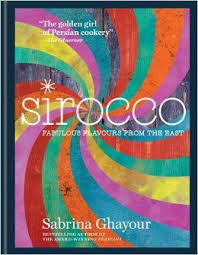
Unknown.jpegWhen I got a copy of Sirocco from the publisher, I was incredibly excited. I adore Persiana, Sabrina Ghayour’s first cookbook, rather a lot: it’s like Jerusalem but slightly more work-a-day… and I think it’s a prettier book too, overall. I had no idea there was another one in the works, and there it suddenly was, on my doorstep!

I’ve cooked from it for the last week or so, but this weekend we had a friend coming over so I thought I’d go full Sirocco.

Main: roast chicken with vegetables.

The chicken has orange and lemon zest and za’atar slathered all over it. I just used the zester on the citrus; next time I would chop it a little finer, because it didn’t stay on the chicken quite as well as I’d hoped. But it was delicious, and I’ll be doing it like this from now on. I also put the zested lemon into the chicken cavity, as Nigella insists.

Souk-spiced root vegetables: turns out I had no cumin seed (?!), but in looking I discovered a jar of Moroccan souk spices that I’d forgotten which was basically what the recipe required. I used parsnip, potato, carrot and celeriac; it was my first time ever cooking (and, I think, eating) the last. Would do so again.

Beans: fried with mustard seeds, preserved lemon, garlic and some other spices. Was meant to have pickled chillies, too, but I couldn’t find what I thought were the right things.

Asparagus: just sat in boiling water for five minutes, then tossed with more preserved lemon, mint, and oil. Also meant to have preserved chillies. I didn’t use anywhere near the amount of preserved lemon suggested, and it was quite lemony enough; needed more mint but it was dark and cold when I went out foraging in the garden.

I think that this dinner will be made again.

Dessert: lime and basil cream

Not enough basil, sadly, but very tangy with the lime – zest and juice of two limes to 600mL of cream (2/3 of recipe). Was meant to be topped with a persimmon compote, but I didn’t realise it was persimmon season, so when I went to the shops and saw them I couldn’t recall how many I needed. Also, persimmons scary. So I did a little not-quite-compote with apples, lime and vanilla. It was very, very tasty; served in jars from Kate’s jams they looked amusingly bohemian. Because I didn’t think our martini glasses were big enough.

IMG_0967.JPG

An average picture but a tasty meal.

It’s available from Fishpond. 

What’s for Dinner?

This book was provided by Allen&Unwin at no cost. Available from April 2016; RRP $34.99.

Unknown.jpeg The book itself

This is a book produced out of recipes from the website My Food Bag, which I hadn’t come across before receiving the book – so it is kinda one big ad. Despite that, I have come down in favour of the book.

The recipes are all designed for weeknight cooking, so there’s generally a minimum of fuss involved. The recipes come from a range of cuisines (harissa to haloumi to coconut rice to steak); there’s a variety of meat, seafood and vego dishes; they’re divided into seasons to help you figure out fruit and veg availability. Every recipe comes with a little circle indicating whether it will take less, medium, or more time, and also whether the recipe is gluten and/or dairy free (or how to make it so; the index also lists all dishes that are GF or DF, as a distinct category). Plus, each recipe also lists the amount of energy, carb, protein and fat in it (… if you follow the recipe…).

Each double page is nicely laid out with the recipe on one side and a picture of the dish on the other. The pictures aren’t too overwhelming – they’re mostly trying to look like they’re on the dinner table – although mine tended not to look like the perfectly plated dishes. Of course. Each dish that I have made was straightforward; I didn’t have to puzzle out any instructions.

One quibble: although this is an Australian book, it refers to kumara (sweet potato) and courgettes (zucchini). I find this really bizarre.

To be honest, this isn’t the sort of book that I buy any more; I’ve become more of a fan of the single-cuisine cookbook that I fall pretty hard for. That said,  I know exactly the sort of person I would give it to: someone who is straight out of home, and/or someone who is just starting to cook for themselves. The recipes aren’t intimidating and they do offer a variety of tastes, spices, and skill levels. If you know someone in that category, or want to revamp your own weekday cooking, this could be a good addition to your repertoire of recipes.

The recipes 

I treat this sort of cookbook a bit cavalierly. Sometimes I will follow a recipe to the letter, other times I will pick and choose bits to go together.

Thai pork patties with coconut rice: friends, I have now boiled rice FOR THE FIRST TIME IN MY LIFEI followed the instructions in the book about how to do it with coconut milk (3/4 coconut and 3/4 water to 1 cup water), valiantly resisted the urge to lift the lid, and it was excellent. These pork patties (with ginger, sesame oil, fish sauce, kaffir lime leaves and coriander) are also very tasty.

Herb-crusted lamb: unexpectedly good, and I didn’t even have the Dijon mustard to act as the initial layer.

Tomato and bean salad: meant to go with steak but I used it with something else; toss cherry tomatoes for a minute or so in a pan, add cannellini beans and add some chimchurri – or, if you’re me, a handful of herbs. DELISH.

Open lasagne of courgette (!), artichokes, goat’s cheese and pesto: OMG. This is green and fresh and so, so tasty. If you were intimidated by the idea of trying to stack everything you could easily just use pasta and use this as a stir-through sauce. Will be making again.

Haloumi in filo: where have you been all my life turns out there is something else you can do with haloumi HALOUMI IN FILO.

Overall I was pleasantly surprised and am happy to have this on my shelf.

It’s available from Fishpond. 


Melbourne Food and Wine Festival

The Melbourne Food and Wine Festival has featured fairly heavily in our Marchs the last few years – some things by ourselves, some things with some equally foody/wine passionate friends. We’ve done French, we’ve done Spanish, we’ve done Middle Eastern and Japanese; some have been incredibly overpriced and eye-rolly while others have been staggeringly good value and amazingly good food.

IMG_0044.JPGThis year we’ve done just two events, which is feeling really sparse now that they’re both done but it’s a shortened Festival this year… and it does mean we’re saving money. So I guess that’s good.

The first was “Melbourne meets Barcelona”, at a Spanish place in Hawthorn, with friends. It was… ok. It was a lot smaller than other venues I’ve been to which was nice. There were six courses, and they were nicely varied, but there was no course that I thought was amazing. One course was abalone… and I think I preferred the manchego-infused rice. The steak was ok but it was just steak. The dessert was weird: shortcrust pastry with a fig paste and then an almond milk cream of some sort, then with pieces of three different cheeses plonked on top. Like I said: Weird. Probably the greatest discovery of the evening, to be honest, was the Spanish vermouth. Totally in love. I also preferred the Australian wines (one from the Pyrenees, another from Heathcote) over most of the Spanish. I didn’t actually finish the sparkling wine *gasp*.

IMG_0045.JPGOur second event was at the Hellenic Museum: Hellenic High Tea. My beloved was a bit dubious but he was pretty impressed when we walked through the Hellenic Museum (which I’ve been meaning to visit for maybe a decade) and there was an amazing courtyard and pavilion with tables and chairs. In the middle of the city. For this one, we were seated at a mixed table of six. Two of the other people were quite happy to chat, and we had occasional interesting conversations. The other two… yeh. For a start they were pretty young, so maybe they had never been on a mixed table like that before. They barely spoke to each other. There were phones out. The beloved hypothesised that this was a gift that they weren’t wild about. I mean, they didn’t even eat everything. What even I do not understand.
Because oh, the food. It was pretty classic high tea food, but the Greek twist was wonderful. Chicken sandwich… with preserved lemon and dill. Gougeres… with oregano and feta (actually that wasn’t my favourite but still). Spanakopita, braised lamb cigarillos, pistachio macarons (SWOON), and it was just wonderful overall. The Greek island iced tea was
excellent. I’d gone for the ‘drink on arrival’ option – the sparkling was ok but I’m told the frappe martini was a bit like having cold coffee. The presentation of all of the food was great, the ambiance was lovely (a warm day but we were in shade; a trio of maybe-uni-students playing entirely background-worthy music; two of the most spectacular arrangement of dahlias I have ever seen in my life).

I’m already looking forward to seeing the advance programme for 2017.


Cypriot cooking

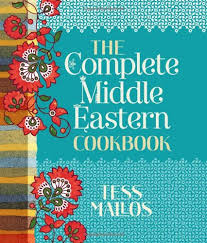
UnknownI’d been wanting this book for quite a long time when I finally saw it on sale and cracked. I like that it doesn’t just have the standard ‘Middle Eastern’ countries that I think Anglo-Australians think of when they think of food; it’s got Armenia, The Gulf States, Yemen…. So my thought was to try and do a week or two of mostly cooking from on country. Obviously that’s going to be harder or easier depending on season, as to what we feel like; and some ingredient will make things hard. But I figure it’s a good way to try new things and make my way through bits of the book.

So my first foray was into Cyprus. It’s not the first country in the book – that’s Greece – but I thought starting with Greek was cheating because I already know at least some Greek food.

The very first recipe is for haloumi. I am intrigued by the idea of making haloumi but I can’t imagine every actually doing it. Unless I hit some holidays and I get really adventurous… which may well happen, not going to lie.

I also don’t think I will be marinating or frying brains (appetisers). Yes, I happily own to being a culinary coward.

Page-wise, the first recipe I tried was the Kolketes (pumpkin pies; appetiser). This was a bit harder than I had expected. Making the filling of pumpkin and bulgur and spices was a cinch. But the pastry wasn’t nearly as easy to deal with as I had expected, and I got a bit frustrated. This was compounded by the instruction to roll the dough out “about the thickness of a normal pie crust” which is not at all useful if you’re not accustomed to making pie crusts. As I am not. So I just had to guess. Ultimately I managed to make the IMG_0885pies; they were quite tasty. However the pastry has made me leary of trying them again.

Next was haloumi bread. Yes yes yes and yes. I can also imagine just making the Kouloura bread dough by itself.

Further on we hit vegetables, and I made Yemista – stuffed vegetables. I can’t quite imagine stuffing eggplants and my love isn’t a huge fan, so I just went with tomatoes and capsicum. I’d seen some American cooking show where the woman did ‘deconstructed’ stuffed capsicums – don’t worry, she was being sly about and knew this was entirely the cheat’s way of making them – and I had every intention of making the filling (mince, rice, tomato) and then piling the capsicum and tomato on top or something. But in the end I actually properly stuffed them (and how organised is this, I made that bit the day before and just had to cook them the next day for dinner!). They were quite tasty, although I think either the stuffing or the sauce (which was a very basic tomato sauce) needed something a bit richer. Possibly just more tomato.

Then there’s Afelia, which is apparently anything with cracked coriander seeds. I made mushrooms with coriander – fry them off, add some red wine, add coriander – and given I love coriander in all its forms I liked it. I would have liked more ideas in this section about what sort of food it should accompany, though. I also made the pork version, which was quite a Moment for me since I’m not sure I’ve personally cooked pork more than… once before? Basically it just tasted like coriander, though; I didn’t think the pork came through at all. Maybe that’s just pork.

Finally, fish: Psari Savoro (fish with rosemary and vinegar). I used Australian rockling. We went through a bit of a fish phase a few years ago but haven’t been back in ages; I’ve just not found a convenient and good fishmonger. There’s apparently one a bit north of where we are, though, that I’ll have to try – I think this cookbook is likely to have some good seafood recipes. Anyway: salting the fish was an intriguing suggestion, and then coating with flour of course made it crisp up a bit and leave flour to thicken the sauce. My love cooked the fish and did it very well. The sauce was made up of garlic, rosemary, vinegar (we used cider instead of brown) and white wine. It thickened up heaps more than I expected, and was basically tasty although too heavy on the vinegar for my taste. One I will quite likely be revisiting.

Starting with Cyrpus was an … interesting choice. It wasn’t an overwhelming success – I didn’t love everything – but there wasn’t anything that I hated the taste of. I’ll be a bit more cautious as I go further into the book as I’ve not always found Mallos’ instructions to be as straightforward as I’d like. With both the pork and the fish, she says to fry until ‘just cooked through’ – but no instructions about what that looks like. It’s surely not hard to say ‘until the pork is white through’ or ‘until the fish is white and flakes’? Even expert cooks aren’t going to get annoyed by a few extra words, are they?

None of these were particularly photogenic, hence the lack of pics.